SCIENTIFIC
INSTUCTIONS
Download scientific publications in pdf format by clicking below:
FAQ
Do I have to regularly check the Kibion® Dynamic instrument?
No, there is no user required maintenance necessary. The Kibion® Dynamic should be checked once per year by a Kibion service technician or a qualified service technician of a dedicated Kibion distributor. For flawless function Kibion recommends a yearly service including change of filter.
How often does the Kibion® Dynamic base need to be auto-adjusted?
The daily auto-adjustment has to be performed every day. The weekly auto-adjustment has to be performed once a week.
When I try to perform a weekly auto-adjustment and I get a “Low CO2” error. How can I fix it?
The weekly auto-adjustment requires a breath sample with at least 3,5 Vol. % CO2 to cover the full range of samples. If you experience problems, make sure that:
If you still encounter this issue try with another user or contact Kibion GmbH Technical Service or your local Kibion GmbH representative.
I receive an “No connection to the internal IO-Board possible” and/or “No connection to the analyzer possible” when I start a measurement. What can I do?
Turn off the instrument and unplug the power cable for 5 minutes. Turn it on again and wait for 10 minutes before you log in.
If you still receive the error please contact Kibion GmbH Technical Service or your local Kibion GmbH representative.
Disposal of waste electrical equipment
Please follow your local regulation and good laboratory practices.
What to do if the BreathcardTM is defective?
If the BreathcardTM is defective (e.g., damaged lithium patch, indicator already yellow, mylar foil torn, etc.), please dispose of it according to good laboratory practices and local regulations and use a new one.
What to do if the Heliprobe® Analyzer is defective?
Please contact Kibion GmbH Technical Service or your local Kibion GmbH representative.

Helicobacter Pylori
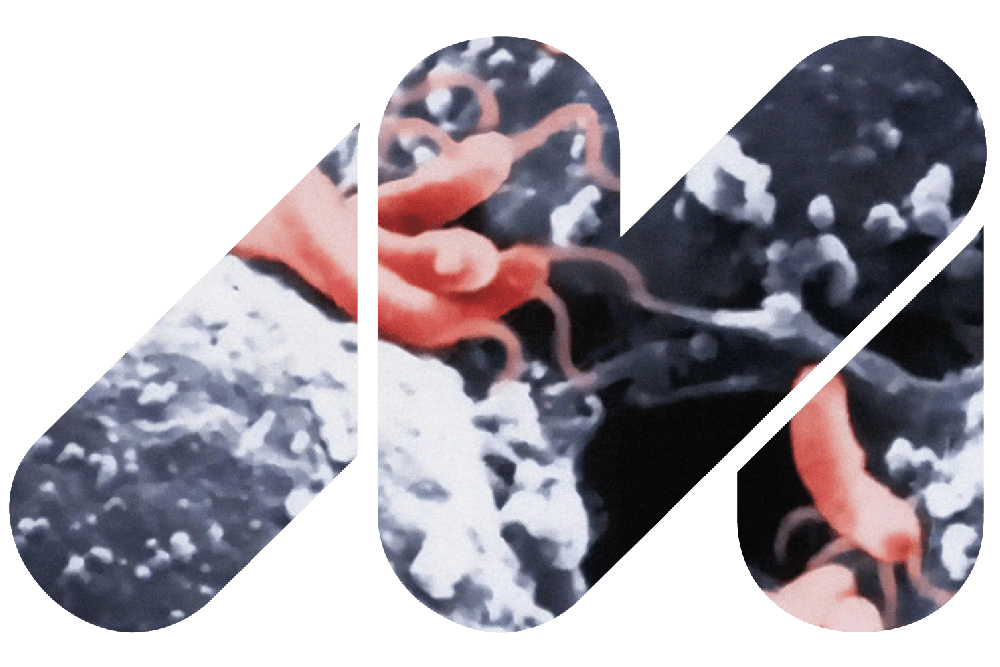
Helicobacter pylori is a gram-negative spirally shaped bacterium that exclusively lives in the mucosa of the stomach and duodenum. This bacterium has a unique way of adapting to the hostile environment of the stomach. The inside of the stomach is composed of gastric juices – digestive enzymes and concentrated hydrochloric acid. These are important for optimal digestive conditions and for elimination of swallowed living microorganisms. Before the discovery of H. pylori, the stomach was thought to be sterile, containing no bacteria. This discovery changed prevailing medical views. Now it is generally accepted that Helicobacter pylori causes gastritis which in turn can lead to ulcers and eventually cancer. Helicobacter pylori eradication decreases the incidence of gastroduodenal ulcer and prevents its recurrence.
In 2005, the two Australian pioneers Barry Marshall and Robin Warren were awarded the Nobel Prize in medicine. They managed to show that Helicobacter pylori infection is responsible for the pathogenesis of gastro-duodenal ulcer disease and possibly gastric cancer and non-ulcer dyspepsia.
Earlier it had been widely accepted that gastric ulcers were strongly coupled to personality traits, lifestyle and stress.
The stomach mucosa is protected from its own gastric juice by a thick layer of mucus that covers the stomach lining. Helicobacter pylori takes advantage of this protection by living in the mucus lining. When Helicobacter pylori is safely encased in the mucus lining, it produces high amounts of an enzyme, urease, to fight the acids in the stomach. The immune system is unable to eradicate bacteria lodged within the mucus lining of the stomach and a chronic inflammation, known as type B-gastritis, develops. The environment is a prerequisite for peptic ulcer disease.
Many researchers believe that H. pylori is transmitted orally by means of fecal matter through the ingestion of waste-tainted food or water. It is also possible that H. pylori could be transmitted from the stomach to the mouth through belching or gastro-esophagal reflux, common symptoms of gastritis, when a small amount of the stomach’s contents is involuntarily forced up the esophagus. The bacterium could then be transmitted through oral contact.
History
whose name originates from the old Nordic “Kibi” meaning smart and alert, offers innovative yet trustworthy solutions. The company currently supplies test systems and high-quality instruments to institutions, hospitals and laboratories in more than 50 countries around the world. In addition, it continuously evaluates new business opportunities within its field of operations.
Orexo acquired the German company Wagner Analysen Technik GmbH, a leading manufacturer of IRIS™ instruments for analyzing diagnostic breath tests. Integrating these two businesses transformed Kibion into a complete solutions provider of diagnostic breath tests and instrumentation, and a leading player in Helicobacter pylori testing.
Kibion was acquired by a team of Swedish investors and business developers. Through this investment Kibion will strengthen its operations and continue to grow.
Kibion was acquired by the French company Laboratory Mayoly Spindler. This acquisition will strengthen both companies’ globally and generate outstanding synergies. Kibion is now successfully integrated in the Mayoly Spindler Group.
The quality of our processes, products and services are continuously optimized and improved to meet customers’ demands and needs.
Kibion is certified based on EN ISO 13485 – Medical Devices – Quality Management Systems – Requirements for regulatory purposes. The scope of the certificate includes development, production, distribution, installation and service of in vitro diagnostic instrument and related accessories in the field of breath test diagnosis. The Certification was carried out by TÜV SÜD Product Service GmbH which is a worldwide recognized Certification Body.
The EN ISO 13485 certification strengthens Kibion to further develop its leading position as provider of breath tests for detection of Helicobacter pylori worldwide.
e-IFU
INSTUCTIONS
Download instructions for use in pdf format by clicking below: